Introduction
Generative AI tools such as chatbots, coding assistants and image generators are becoming a regular part of research. They can help researchers work more efficiently, generate ideas, write code and analyse information.
Like any computational tool, AI relies on energy, water, and computing hardware. These costs are often hidden from view, but they are shaped by choices about tools, workflows and computing infrastructure [1]. Small, practical decisions, such as selecting an appropriate model, reusing existing tools or designing efficient workflows, can help support more sustainable research and make a meaningful difference to resource use over time.
This article outlines some of the key environmental considerations and practical questions that can support more sustainable research practice, whether you are using AI to support your own research, developing AI-based methods or managing the infrastructure behind them.
AI growth and resource use
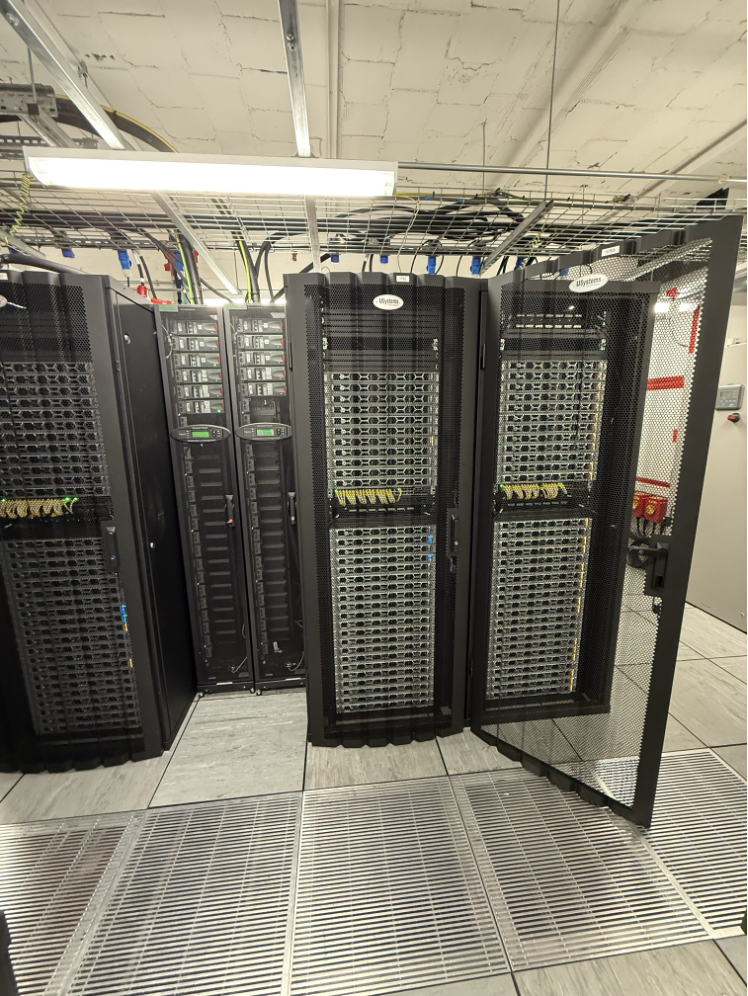
The use of generative AI is increasing rapidly in research, teaching, industry and public services. Modern AI systems rely heavily on specialised hardware, particularly GPUs, to train models and deliver services such as chatbots and image generators. As more organisations adopt these technologies, demand for computing infrastructure and data-centre capacity continues to grow.
This increase in demand is already having a measurable impact on energy consumption. Data centres are estimated to account for around 1.5% of global electricity use [2] and 4.4% of electricity use in the United States [3]. The International Energy Agency projects that electricity demand from data centres worldwide could more than double by 2030, with AI expected to be a major driver of this increase.
Environmental concerns
Running AI services requires electricity, cooling systems, networking equipment and supporting infrastructure. Large data centres can increase demand on local electricity grids, while cooling systems may also place significant pressure on water resources. In areas already facing water stress, this can become an important concern. The UK Government’s AI’s thirst for water blog explores some of the challenges associated with growing water demand in digital infrastructure.
Understanding the environmental impact of AI is not always straightforward. Cloud and data-centre providers often report energy use at the level of an entire facility rather than for individual services, making it difficult to estimate the environmental cost of specific AI applications or compare different approaches. Even where estimates are available, they can vary widely depending on the model, the infrastructure and how the system is used [4].
Discussions about AI sustainability often focus on the electricity needed to run models, while giving less attention to the environmental costs associated with producing and replacing hardware. AI systems rely on GPUs, servers, networking equipment and cooling infrastructure, all of which require raw materials, manufacturing, transport and eventual disposal. As demand grows, frequent hardware upgrades can increase resource consumption and contribute to growing volumes of electronic waste [5,6].
Universities, institutions, and infrastructure choices
Universities are increasingly adopting AI tools for research, teaching and administration. This raises practical questions about how AI services are delivered, whether through local infrastructure, shared HPC systems, cloud services or third-party tools. These choices affect performance and sustainability, as institutions balance the benefits of AI against energy use, infrastructure costs and pressure on shared computing resources. As part of this, universities should consider the principles of responsible research and innovation, which emphasise the need to consider the environmental impact of digital infrastructure alongside ethical and societal implications.
Decisions about procurement, model selection, and platform design also have long-term consequences for maintenance, energy demand and future flexibility. In many cases, smaller or more specialised models can meet user needs while requiring substantially fewer resources than large general-purpose systems. Considering these trade-offs early can help institutions use shared resources more effectively and support more sustainable adoption of AI.
Supporting sustainable use of AI
A recent report from the Royal Academy of Engineering emphasises that small design and implementation choices can have a significant effect on resource use:
- Smaller, task-specific models can reduce energy use by up to 90% compared with larger, general-purpose models [7].
- Streamlining prompts, reducing unnecessary output, and avoiding repeated queries can reduce energy use by more than 50% [7].
- The environmental footprint of the same AI task can vary by two to three orders of magnitude depending on the model, hardware, and infrastructure used [8].
These findings show that small decisions about models, workflows, and infrastructure can have a substantial cumulative impact.
When planning AI-enabled research, a few practical questions can help:
- Is AI the most appropriate tool for this task?
- Could a smaller or existing model achieve the same result?
- Does the expected benefit justify the additional computational cost?
- If the project grows, will the computing and storage requirements remain manageable?
Once an AI-based approach has been chosen, resource use can often be reduced through small practical changes, such as writing clearer prompts, avoiding unnecessary outputs, reusing existing results, and selecting models that match the requirements of the task.
For projects involving large-scale AI training, specialised hardware or long-term operational commitments, early discussions with research computing and digital infrastructure services can help identify efficient and sustainable approaches.
It’s not just AI
Generative AI has drawn attention to the environmental impact of digital technologies, but it is only part of a broader challenge. Many of the same sustainability questions apply across research computing and digital infrastructure more generally.
Growing computational demand does not necessarily lead to proportional increases in energy use. Between 2010 and 2018, global data-centre workloads increased more than fivefold while energy use rose by only around 6%, largely due to improvements in hardware, software, and infrastructure efficiency [9]. This shows that technology choices matter. Efficient systems, well-designed workflows and appropriate infrastructure can significantly reduce environmental impact across many types of digital activity, not just AI.
Conclusion
AI is becoming an increasingly important part of research, teaching and professional services. As its use grows, understanding the resources required to support it will become an important part of sustainable digital research.
The evidence suggests that small decisions about models, workflows, infrastructure, and patterns of use can make a substantial difference. Considering these factors early can help researchers use AI effectively while making better use of shared resources.
Planning your next project?
Whether you’re preparing a funding application or planning a compute-intensive project, Research Computing can help you scope, cost and deliver efficient, sustainable solutions. Submit a Research Computing query (login required) to start the conversation.
Sources
- Alex de Vries-Gao. The carbon and water footprints of data centers and what this could mean for artificial intelligence. Patterns, 7(1), 2026.
- Andrey Semenov and Ekaterina Oganesyan. Data centers environmental impact assessment features. In E3S web of conferences, volume 311, page 04007. EDP Sciences, 2021.
- Arman Shehabi, Alex Newkirk, Sarah J Smith, Alex Hubbard, Nuoa Lei, Md Abu Bakar Siddik, Billie Holecek, Jonathan Koomey, Eric Masanet, and Dale Sartor. 2024 united states data center energy usage report. 2024.
- Can Hankendi, Ayse K Coskun, and Benjamin K Sovacool. Why transparency matters for sustainable data centers and carbon-neutral artificial intelligence (ai). iScience, 28(11), 2025.
- Katherine Lambert and Sasha Luccioni. From cradle to cloud: A life cycle review of ai’s environmental footprint. arXiv preprint arXiv:2605.05416, 2026.
- Noemi Luna Carmeno, Tiago Domingos, and Daniel W O’Neill. The impacts of artificial intelligence on environmental sustainability and human wellbeing. arXiv preprint arXiv:2602.24091, 2026.
- Leona Verdadero, Ivana Drobnjak, Hristijan Bosilkovski, Zekun Wu, Emma Fischer, and Maria Perez Ortiz. Smarter, smaller, stronger: resource-efficient generative al & the future of digital transformation. 2025.
- David Patterson, Joseph Gonzalez, Quoc Le, Chen Liang, Lluis-Miquel Munguia, Daniel Rothchild, David So, Maud Texier, and Jeff Dean. Carbon emissions and large neural network training. arXiv preprint arXiv:2104.10350, 2021.
- Eric Masanet, Arman Shehabi, Nuoa Lei, Sarah Smith, and Jonathan Koomey. Recalibrating global data center energy-use estimates. Science, 367(6481):984–986, 2020.