Building on the success of last year’s summer internship programme, we’re delighted to welcome four new RSE interns this summer. Over the coming months, they will work on a diverse range of research software and consulting projects, supported by both the RSE team and academic mentors.
Our interns come from a wide range of academic backgrounds, and some are encountering programming and high-performance computing (HPC) for the first time. The 8-week N8 CIR-funded programme enables us to engage with researchers across a broad range of disciplines, helping to raise awareness of digital research careers while giving interns opportunities to develop valuable technical and transferable skills alongside their studies.
Meet the interns and their projects
Millie Cain – Creating a Historical Sentiment Lexicon

Millie will be starting the fourth year of her Classical Civilisations with English degree in September. She will be working with Emily Middleton in the School of English to develop a historical sentiment lexicon using data from Johnson’s Dictionary Online and HPC resources.
The project will explore different approaches to generating sentiment scores using Google’s BERT model and evaluate their effectiveness on thousands of historical newspaper articles. While smaller dataset-specific lexica already exist, this work represents an important step towards making sentiment analysis more historically rigorous.
Owais Mahmood – Interpreting Readability Evaluation with Explainable AI
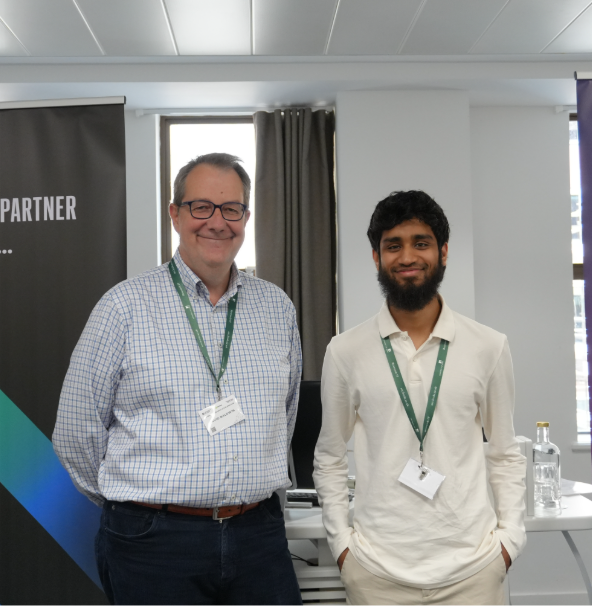
Owais is studying Computer Science and will be working with Nouran Khallaf from the Centre for Translation Studies on a project investigating how explainability techniques and LLM-based evaluation can be combined to assess readability and text simplification systems.
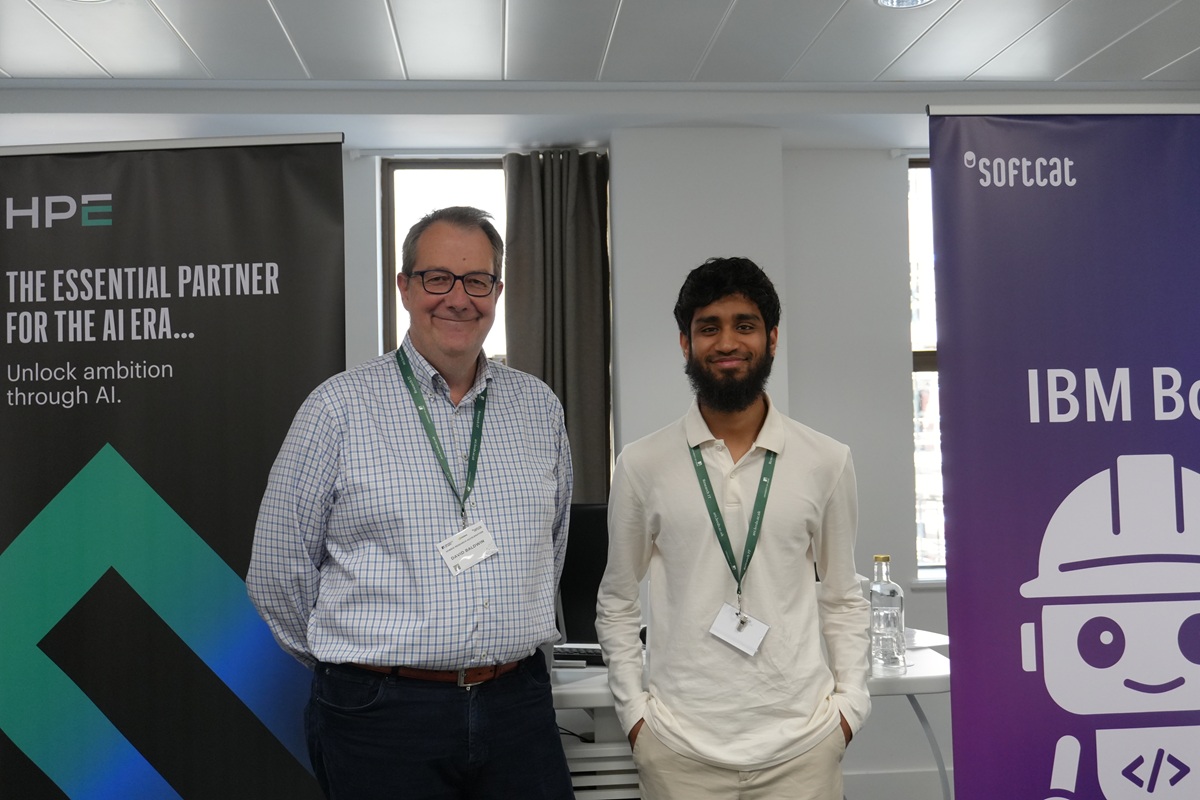
Owais recently impressed a panel of judges at our Hybrid Research Acceleration Event, where he delivered a lightning talk proposing a digital twin of the human brain for early dementia diagnosis, earning himself a DX Spark Supercomputer prize.
Nell Wilkinson – Where did the English novel come from?
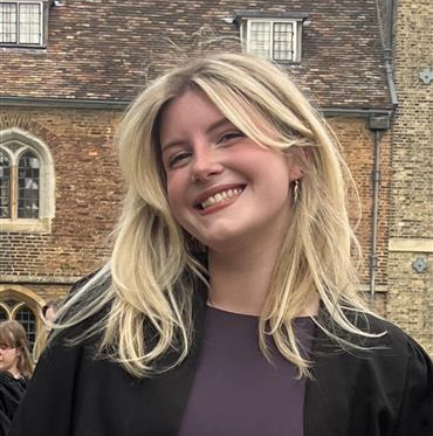
English student Nell will be working with Dr Mel Evans from the School of English on a data-driven project investigating the origins of the English novel.
Nell is experimenting with and learning how to use computational tools to explore language in 17th century narrative prose fiction and how this catalysed the novel as we know it today.
The project will aim to describe and interpret the linguistic features that characterise the earliest stages of literary prose fiction in English, focusing on texts written and read during the mid-to-late seventeenth century.
Namira Chowdhury – Modelling of a Spinal Unit using HPC
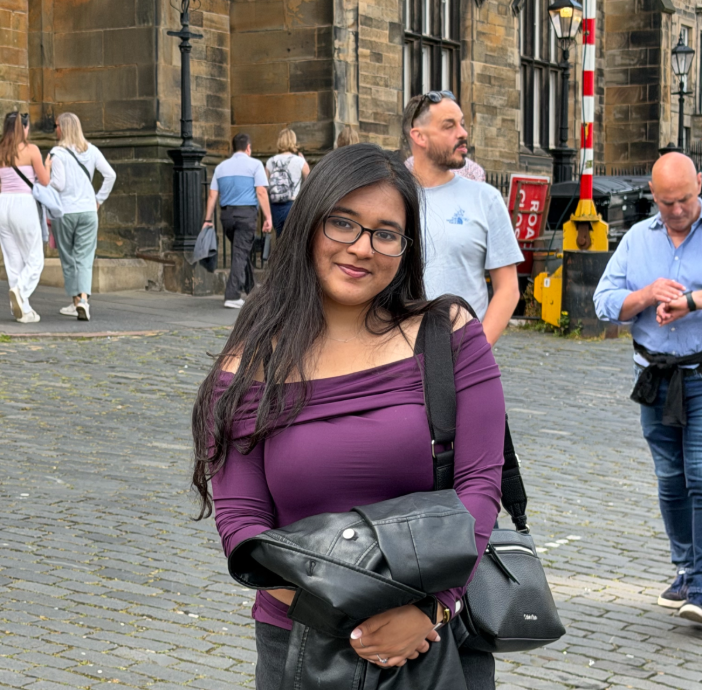
Namira recently graduated from Leeds with a degree in Neuroscience (congratulations, Namira!) and will be working with Dr Gavin Day from the School of Mechanical Engineering.
The project aims to make general finite element (FE) models of the spinal unit (specifically, the lower vertebrae, at L4 and L5) more realistic by taking into account population-scale variability in biomechanics, updating the material properties from linear elastic to hyperelastic. Namira’s role is to optimize the current workflow to test the effect of biomechanical properties on the updated FE models, and managing FE simulation jobs running on the university’s HPC, Aire.
Interested in hosting a future RSE intern?
Join our mailing list to hear about upcoming opportunities and discover how an intern could help advance your research.
Cover image: David Baldwin and Owais Mahmood captured at the recent Hybrid Research Acceleration Event.